"재앙을 부를 조합" "재앙의 조합"
이 표현은 미래에 발생할 일들이 합쳐져서 나쁜 결과를 초래할 가능성이 있을 때 사용됩니다. 어떤 상황이나 행동의 조합이 잘못된 결과를 가져올 것이라는 의미입니다.
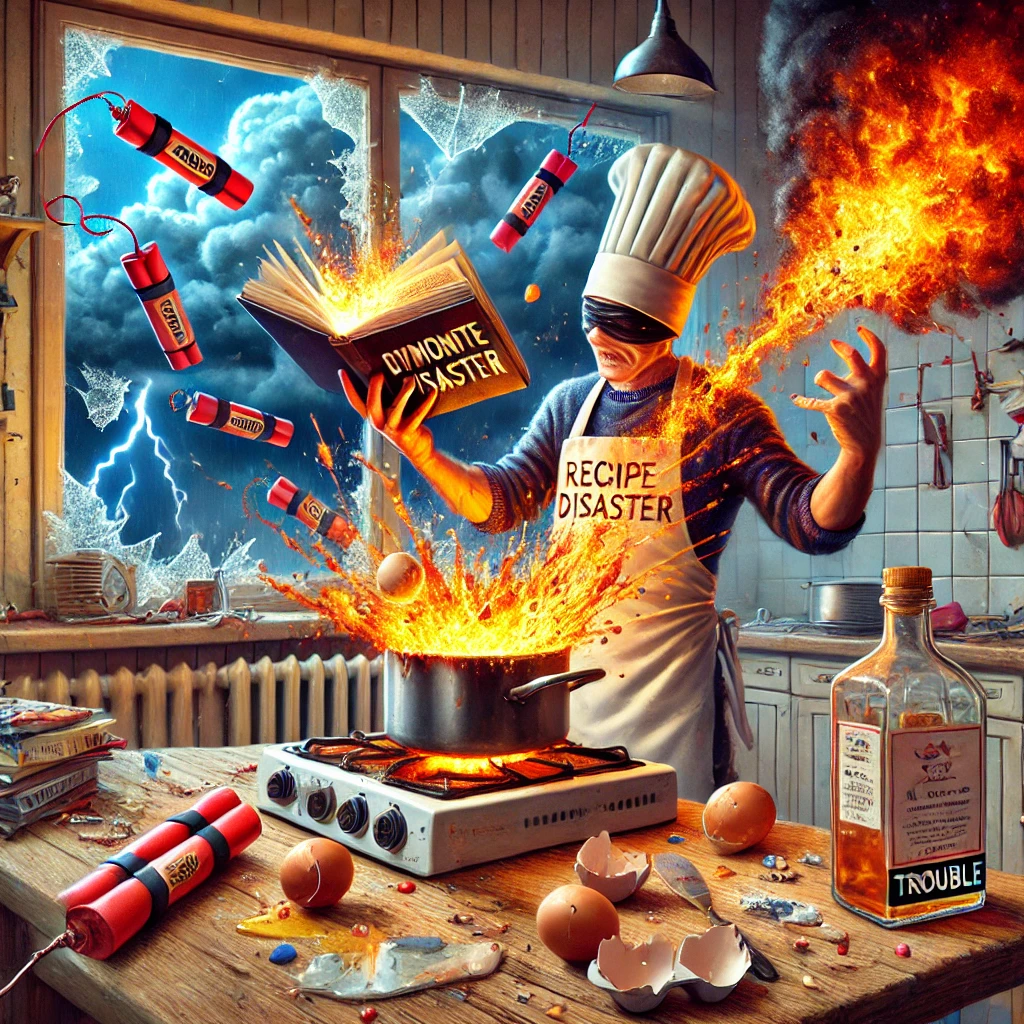
뜻:
글자 그대로의 의미: "레시피"는 음식을 만드는 방법을 의미하는데, "잘못된 재료가 섞이면 나쁜 결과가 나온다"는 의미에서 유래했습니다.
비유적인 의미: 여러 요소가 결합되어 좋지 않은 결과를 초래할 것이라고 경고할 때 사용합니다.
유래:
이 표현은 요리에서 나온 말로, 좋은 결과를 얻으려면 올바른 재료와 방법을 사용해야 한다는 개념에서 발전했습니다. 반대로 잘못된 재료나 조합은 나쁜 결과를 낳을 수 있다는 의미에서 '재앙을 부를 조합'이라는 표현으로 확장되었습니다.
The expression "it's a recipe for disaster" is used when a combination of circumstances, actions, or decisions is likely to lead to a bad or undesirable outcome. It's often used to describe situations that seem inevitable or highly risky, where things are likely to go wrong due to poor planning, incompatible elements, or bad choices.
Meaning:
Literal Meaning: The phrase compares a bad situation to a "recipe" (the method of preparing food), suggesting that following a particular combination of events or decisions will result in disaster.
Figurative Meaning: It refers to a scenario where multiple factors are in play that, when combined, are bound to lead to a bad result.
Origin:
The phrase has its roots in the concept of recipes in cooking, where the right combination of ingredients is essential for success. If you mix the wrong ingredients, the result will likely be something unpleasant. The expression has evolved to refer to any situation where bad elements are combined, leading to a negative outcome.
---
1. A: "She’s planning to drive across the country in an old car with no spare tire."
B: "That sounds like a recipe for disaster!"
A: "그녀가 낡은 차로 스페어 타이어도 없이 나라를 가로질러 여행하려고 한다고 해."
B: "그거 완전히 재앙을 부를 조합이야!"
2. A: "He’s going to try managing both his job and a new business at the same time."
B: "That’s a recipe for disaster. He’ll burn out in no time."
A: "그가 일과 새 사업을 동시에 관리하려고 한다고 해."
B: "그건 재앙을 부를 조합이야. 곧 탈진할 거야."
3. A: "You can’t expect to do well on the exam if you only study for an hour."
B: "Yeah, that’s definitely a recipe for disaster."
A: "시험 공부 한 시간만 하고 시험을 보려고 해."
B: "응, 그건 재앙을 부를 조합이야."
4. A: "I’m hosting a dinner party, but I’ve never cooked for more than two people before."
B: "Hmm, that’s a recipe for disaster! Are you sure you want to take that risk?"
A: "저녁 파티를 열려고 하는데 두 사람 이상 요리를 해본 적이 없어."
B: "음, 그건 재앙을 부를 조합이야! 리스크를 감수할 거야?"
5. A: "He hasn’t had any sleep all week and is planning to run a marathon tomorrow."
B: "That’s a recipe for disaster. He’s going to collapse halfway."
A: "일주일 내내 잠을 못 잤는데 내일 마라톤에 도전한다고 해."
B: "그건 재앙을 부를 조합이야. 중간에 쓰러질 거야."
6. A: "They’re putting all their resources into this one risky project without a backup plan."
B: "That’s definitely a recipe for disaster."
A: "그들은 백업 계획도 없이 모든 자원을 한 리스크 큰 프로젝트에 쏟아붓고 있어."
B: "그건 재앙을 부를 조합이야."
7. A: "I’ve invited all my friends to my place for a party, and I’m trying to organize everything last minute."
B: "That’s a recipe for disaster. You should have planned ahead."
A: "내가 친구들을 다 초대했는데 파티 준비를 막 시작했어."
B: "그건 재앙을 부를 조합이야. 미리 계획을 세웠어야 했어."
8. A: "We’re heading out on a road trip, but the weather forecast predicts heavy rain all week."
B: "That’s a recipe for disaster. I’d rethink it."
A: "우리는 로드 트립을 가는데, 날씨 예보는 일주일 내내 비가 올 거라고 해."
B: "그건 재앙을 부를 조합이야. 다시 생각해보는 게 좋겠어."
9. A: "She’s trying to fix the car herself, even though she has no idea about engines."
B: "That’s a recipe for disaster! She could make it worse."
A: "그녀가 엔진에 대해 아무것도 모른 채 자동차를 수리하려고 해."
B: "그건 재앙을 부를 조합이야! 더 망칠 수 있어."
10. A: "I’ve got a presentation, a meeting, and a deadline all on the same day!"
B: "Wow, that sounds like a recipe for disaster. You might want to prioritize!"
A: "발표, 회의, 마감일이 다 같은 날에 있어!"
B: "와, 그건 재앙을 부를 조합이야. 우선순위를 정해야 할 것 같아."
---
'English' 카테고리의 다른 글
| Keep your hair on (1) | 2024.11.22 |
|---|---|
| make ends meet (2) | 2024.11.21 |
| I've got it all in hand (1) | 2024.11.19 |
| Cave in (3) | 2024.11.18 |
| gets out of hand (2) | 2024.11.16 |